
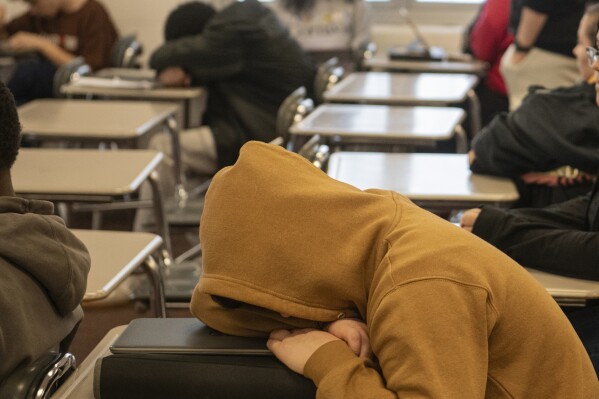
If someone asked whether sleep is important, the obvious answer would be yes – and you’d be correct. Sleep happens naturally, every species at birth sleeps in a regular routine even if they aren’t told or taught to do, Our bodies regulate sleep the same way we regulate eating, drinking, and breathing. That alone shows that sleep plays a critical role in maintaining our well being.
Why Do We Sleep Anyway?
There is still no single explanation for why we sleep, but scientists have developed theories about why humans spend nearly one-third of their lives asleep. Think of tiredness the same way as being hungry or thirsty. It’s our body’s protection mechanism, a sign to tell us what we need. Without these signals, we wouldn’t know how to give our bodies the rest or nutrients necessary to survive.
Sleeping is powered by powerful internal drives the same way eating is. Going a while without sleep can cause high amounts of sleepiness the same way that going a while without food will cause you to be really hungry, no t leaving until you fix the problem.
Unanswerable Questions?
Despite countless studies, the question “Why do we sleep?” remains unanswered.In 1963 Randy Gardner’s record held the world record for the longest time a human has gone without sleep: 11 days and 24 minutes (264.4 hours). It was a high school science fair project and while he recovered with no long term physical defects after sleeping for 14 hours, the experience caused significant mental effects, such as irritability,cognitive impairment, and memory lapses. His experiment proved that humans can go days without sleep, but at a cost. Even with his recovery, scientists still cannot fully explain why sleep is biologically required, only that it clearly is.
A Theory on Why We Sleep
One of the earliest theories of sleep, sometimes called the adaptive or evolutionary theory, suggests that inactivity at night is an adaptation that serves a survival function by keeping organisms out of harm’s way at times when they would be particularly vulnerable. The theory suggests that animals that were able to stay still and quiet during these periods of vulnerability had an advantage over other animals that remained active.
Sleep remains one of the body’s most essential (and least understood) functions. While scientists continue to study it, the evidence is clear: without regular rest, both the mind and body begin to break down.