
As of Jan. 20, 2026, the United Nations University Institute for Water officially declared “an era of global water bankruptcy” with no way back. This statement comes after decades of surface and groundwater depletion, water overallocation, deforestation, pollution, and global heating.
This is the first time the UN has declared our water supply as bankrupt rather than “stressed” or “severely harmed.” This report claims irreversible damage to our water systems which has pushed our planet past its renewable limits.
The director for the United Nations University’s Institute for Water, Kaveh Madani says this overuse has led to a “post-crisis state of failure.” Chronic water insolvency has made it impossible for many regions to return to their historic water levels.
The UN report draws on satellite data, hydraulic modeling, and over 300 case studies to document the scale of water loss.
Ground water depletion shows that around 70% of the world’s aquifers are declining long term. Land subsidence linked to groundwater over-pumping now affects almost 5% of the global land area. This puts countless cities, deltas, and coastal zones at risk of flooding.
Over 50% of large freshwater lakes have lost 22 billion metric tons of water between 1992 and 2020 threatening one-quarter of the world’s population. Glaciers have shrunk by over 36% in the last decade threatening hundreds of millions of people who rely on glacier water and snowmelt.
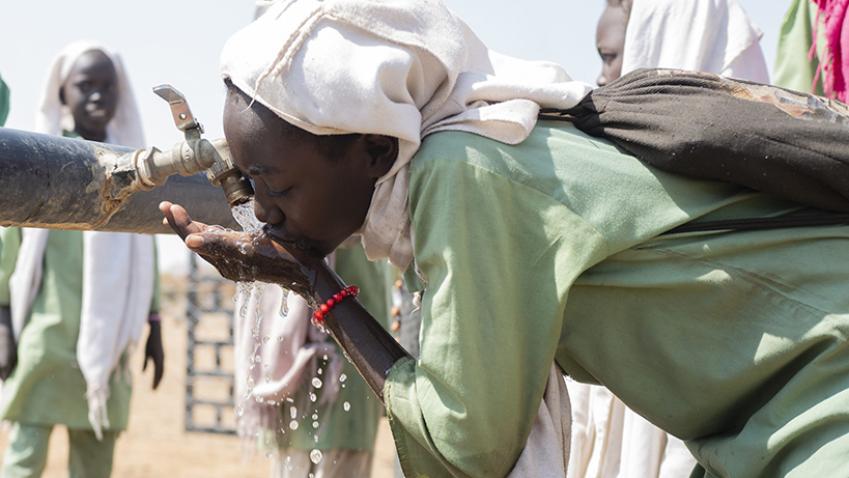
4.4 billion people are threatened by water scarcity one month every year. 2.2 billion people lack access to safely managed drinking water. Three quarters of the world live in countries classified as “water insecure.”
410 million hectares of wetlands, an area the size of the European Union since 1975 have vanished. The loss of ecosystem services from these wetlands is valued at 5.1 trillion dollars.
Current widespread droughts cost on average 307 billion dollars a year. Without a deliberate commitment to equity, the costs of adjustment will increase and fall disproportionately on farmers, rural communities, Indigenous Peoples, and other vulnerable groups.
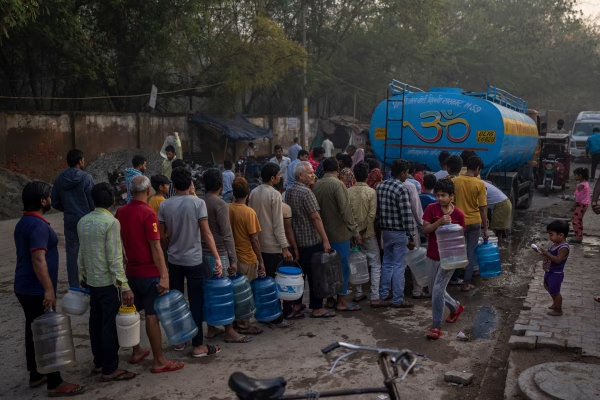
Around 50 of the world’s 100 largest cities are already experiencing “high water stress”, while 38 including Beijing, New York, Delhi, Los Angeles and Rio de Janeiro face levels of “extremely high stress.”
Some cities such as Cape Town, Sao Paulo, and Tehran which have a combined metro population of 44 million have already faced “Day Zero” emergencies; events where water supplies for a city are near complete depletion.
In the coming years large decreases in the availability of water also dramatically increases the risk of conflict between nations in many regions.
By 2050, water challenges could threaten more than half of the world’s food production. Water shortages are projected to shrink GDP by 8% in high income countries and 10–15% in lower income countries.
In the face of such dire circumstances, nations will take aggressive action regardless of the impact on their weaker neighbors.
The US and Mexico have continued to debate over a 1944 water sharing treaty with the US threatening to block the water supply of Tijuana and Mexicali. China’s construction of dams and canals in the Xinjiang province have already caused water shortages in Kaskatsan. Russia is building 18 dams with 40 already constructed along the Volga exacerbating the decline of the Caspian sea which five countries rely on.
Military conflicts and violence involving water resources have risen by roughly 165% since 2000. 400 incidents, nearly 90% of all recorded water-related violence in history has occurred since 2000. Demand for fresh water will outstrip supply by 40% by 2030. Unless nations carefully supervise the provision of water to their populations, threats to domestic security are near certain.
Iran and Afghanistan have already skirmished along the Helmand river in 2023. Egypt is actively providing military aid to Ethiopia to persuade their government regarding water rights on the Nile River In an era of a global water bankruptcy the number of conflicts is expected to dramatically increase. Pakistan and India have agreed to the Indus Waters Treaty in 1960 allocating the eastern rivers to India and the western rivers to Pakistan citing “blood and water do not flow together.” However as of April 23, 2025 New Delhi says they are no longer bound by this treaty. In response Pakistan has warned India that any disruption over their water supply would mean war.
“If we continue to manage these failures as temporary crises with short-term fixes, we will only deepen the ecological damage and fuel social conflicts,” Madani said.
“Declaring bankruptcy is not about giving up, it is about starting fresh. By acknowledging the reality of water bankruptcy, we can finally make the hard choices that will protect people, economies, and ecosystems,” Madani added. “The longer we delay, the deeper the deficit grows.”
This crisis affects all continents through threatening global food supplies, extreme prices, causing severe health risks, while triggering conflict, displacement, and significant economic instability.