As the conflict in Iran turns into a war of attrition, reality is beginning to set on the Pentagon. The U.S. will lose the war in Iran. That’s what all the evidence is pointing towards.
In the months since Operation Epic Fury began, the U.S. and Israel have put on a terrifying display of conventional military dominance. However, as the war enters its 54th day, we are witnessing “pyrrhic victories” that may break the American economy long before they bend the will of Iran.
The Illusion of Regime Change
American approach to the war can be characterized by a “Decapitation Strategy” that fails to account for Iran’s “Hydra” power structure. Unlike what Washington thought, assassinating Iran’s Supreme Leader and other top officials does not result in regime change. Iran has repeatedly demonstrated their ability to replace high-level vacant roles even under extreme pressure, maintaining a clear line of authority.
On top of this, “Satanic” framing of the U.S. and Israel by the Ayatollah has turned Iranian perception of the conflict from a regional skirmish into a theological war against “The Great Satan.” The result has been a population who considers hardship as “sacred resistance” and “martyrdom” reframing suffering as a necessary sacrifice.
This ideological framework, combined with historical grievances, creates intense domestic resistance to U.S. demands and intervention, making American led regime change impossible. And as external pressure from the U.S. and Israel persists, this idea is continually reinforced.
The Math of Exhaustion
Iran has adopted a strategy of asymmetric warfare, designed to inflict maximum pain on the U.S. and its allies through low-cost, high-impact tactics that the conventional American military isn’t prepared for.
7 weeks into the war, the financial toll is already appalling. With a burn rate of nearly $1 billion a day, “Epic Fury” adds $25-35 billion to the national debt already under scrutiny. In total, the war has cost the U.S. upwards of $35 billion on munitions, naval/air operations, and equipment losses.
The U.S. is spending $2 million to $12 million per interceptor to shoot down drones and missiles that cost Iran as little as $20,000. The U.S. is already relocating Patriot and THAAD missile defense systems out of East Asia to the Middle East just to keep up with the swarm of Iranian strikes.
The U.S. is finding that conventional superiority is a blunt instrument against Iran’s porcupine strategies. They’re not fighting another military power; they’re fighting a math problem where the cost of defense is 50 times higher than the cost of attack in a country that has had 20 years to prepare.
Although the U.S. claims to have “decimated” Iran’s military capabilities, data indicates Iran has continued to maintain a steady, though reduced, pace of missile and drone attacks, suggesting its military capabilities have not entirely been destroyed like the U.S. says.
Due to such high unexpected losses, on March 30, the White House submitted an emergency request from Congress seeking an additional $200 billion to continue the war that’s running their funds dry.
Following the initial wave of strikes, the U.S. and Israel began a rapid bombardment of Iran’s core infrastructure. Precision strikes have struck nuclear research facilities, energy grids, and government compounds. Humanitarian agencies now report that over 3,400 people have been killed as “collateral damage” in these civilian areas.
In a massive retaliatory display, Tehran fired over 500 ballistic missiles while deploying thousands of suicide drones. These strikes targeting military bases also hit desalination plants and power hubs across Gulf nations, effectively dragging neighboring states into the line of fire.
Beyond the deployment of additional B-52 strategic bombers, thousands of American ground troops are currently flowing into the theater, adding to the 50,000 personnel already stationed in the region. This massive buildup has prompted international speculation that a full-scale ground invasion no longer seems like just a “contingency plan.”
Iran’s War on the Global Economy
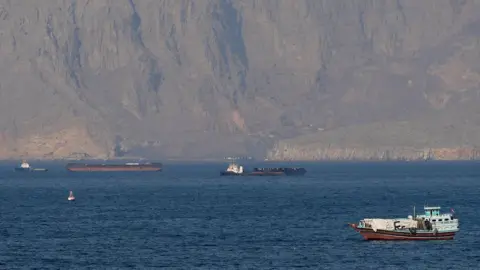
By effectively closing the Strait of Hormuz and The Red Sea, Iran has removed 20-30% of the world’s oil from the market while disrupting around 15% of global trade. Despite cease-fires, this has forced gas prices past $103 a barrel inflating gas prices in Europe by over 70% putting countries like Ukraine at risk of an energy crisis. Around the world data projects a 0.3% reduction in global GDP growth. In the U.S., gas prices have jumped to over $4.00 a gallon while disruption of trade has triggered a wave of domestic inflation that military force cannot suppress.
Despite America’s “energy independence,” American consumers saw dramatic price increases in gas, surging at its peak by 39 percent from $2.98 to $4.14 per gallon. The energy supply shock is driving up input costs for industries, with forecasts indicating higher inflation may compel central banks to delay rate cuts or increase rates, raising the risk of a recession.
Escalating Tensions and Failed Peace Talks
The current standoff between Washington and Tehran has created a “diplomatic dead end” where both sides’ core demands are effective non-starters. Trumps insistance on picking Iran’s next leader and dismantling their ballistic missel program is viewed by the iranian establishment as total national suicide. For a regime built on the principle of “islamic sovereignty” handing over the keys to the military and government is an impossible pill to swallow. Conversely, Iran’s demands for war reparations and a formal end to U.S. aggression are political poison for Trump; agreeing to pay compensation would be framed by his domestic critics a “taxpayer funded apology”
On April 7, Trump warned that “a whole civilization will die tonight” but then announced a two-week ceasefire brokered by Pakistan where Iran would agree to lift its blockade on the strait of Hormuz. However, as of April 13, the U.S. announced their own blockade prompting Iran to close the strait again. Despite some tankers bypassing the dual blockade and announcements briefly lifting the closure, Hormuz remains effectively closed to most international traffic and remains at a standstill.
To say the ceasefire is unstable is misleading. While the ceasefire holds on paper, Iran has already launched strikes on Israel and several Arab Gulf countries. Despite this, Israel’s war against Hezbollah continues. After the ceasefire, Israel Defense Forces conducted its largest bombardment of the war and a ground invasion into southern Lebanon in their fight, resulting in thousands dead and over 1 million displaced.
As of April 26, a second round of peace talks began in Islamabad which effectively broke down before they even started. Pakistani officials, who brokered the engagement, believe both parties were initially “looking for a way out” of the conflict. However, analysts now suggest the process may have been “performative,” as neither side was willing to bend on their most critical strategic interests, such as the Strait of Hormuz or nuclear enrichment.
Given the current deadlock in the Islamabad talks and both sides refusing to budge, a swift end to the war seems unlikely unless one party significantly lowers its “red line” demands.
Even if the war ends tomorrow, the result of the nine-week campaign is clear: The United States is in a weaker position than before the war. Air strikes have killed experienced Iranian leaders, taken out Iranian military assets, and destroyed critical infrastructure. However, the Islamic Republic can replace its leaders, rebuild its factories, and produce new equipment. In other words, U.S. performance in the war can only be characterized as costly, leaving the United States without any long-term strategic gains. So overall, Iran has emerged the winner from Operation Epic Fury. By any measure the US is less safe and less healthy than it was nine weeks ago.