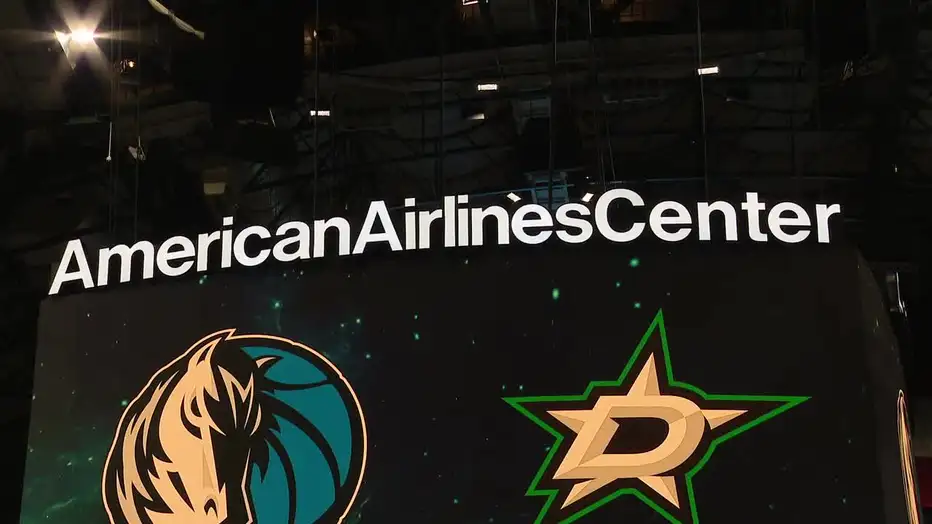
On March 6, the Dallas Mavericks and the Dallas Stars were engaged in a legal battle, specifically in a summary judgment hearing. This has been a continuation of the ongoing legal battle between the Dallas-based sports franchises, starting all the way from when the Mavs sued the Stars on Oct 28, 2025, over a dispute concerning their joint ownership and operation of American Airlines Center. This dispute over their shared venue holds vital implications not only for sports in the DFW area but also for the economy and social landscape. However, to understand the lawsuit, we must first understand who is involved in it.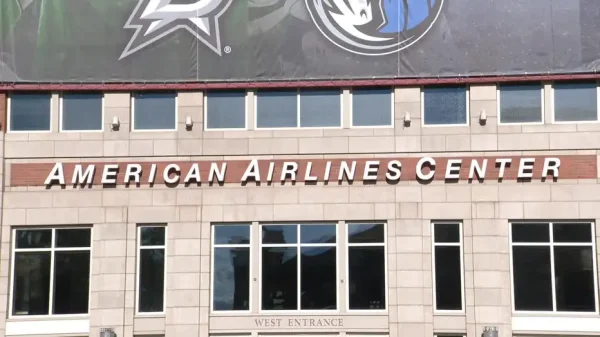
The Mavericks
The Dallas Mavericks, also known as the Mavs, are a member of the National Basketball Association, competing in the Southwest Division of the Western Conference. They were founded in 1980 by Don Carter and Norm Sonju to fill the void of the Dallas market after the Dallas Chaparrals relocated to San Antonio, becoming the Spurs. Since 2023, they have been under the majority ownership of Miriam Adelson and Patrick Dumont, with minority ownership held by Mark Cuban and Mary Stanton.
The Stars
Meanwhile, the Dallas Stars play in the National Hockey League, specifically in the Central Division of the Western Conference. They were founded in 1967 as the Minneapolis North Stars by Gordon Ritz. The Stars later moved to Dallas under Norman Green in 1993 due to financial disputes, poor performance, and low attendance. They have been under the sole ownership of Tom Gaglardi since 2011.
The Timeline
The American Airlines Center, also known as the AAC, is a multi-purpose indoor arena in downtown Dallas. It was built in 1998 to replace the then-aging and undersized Reunion Arena. Both teams would lease the venue for a period of thirty years.
This lawsuit officially began this year, but the origins of the dispute date back to 2003, when the Stars moved their headquarters and practice facility to Comerica Center in Frisco. The Mavs claimed the Stars violated the 1998 franchise agreement, which required both their corporate headquarters to be in Dallas. However, no action was taken.
In Feb 2024, Stars President and CEO Brad Alberts and Mavericks Governor Dumont met in Dallas to discuss potential improvements of AAC. Alberts later stated that six months later, the Stars, Mavs and the city of Dallas would extend the lease through 2035-36 and agreed on renovation plans; this would add eight more years to the current lease.
According to official city documentation, all three parties verbally agreed to a renovation with the Mavs, and the city would split the costs. However, the Stars claimed that they also plan to split the cost and that no verbal agreement was reached. During the meeting, Alberts apologized for the Stars’ move to Frisco. He claimed that the team was not aware of breaching the contract and planned to return to Dallas by Dec 2025. 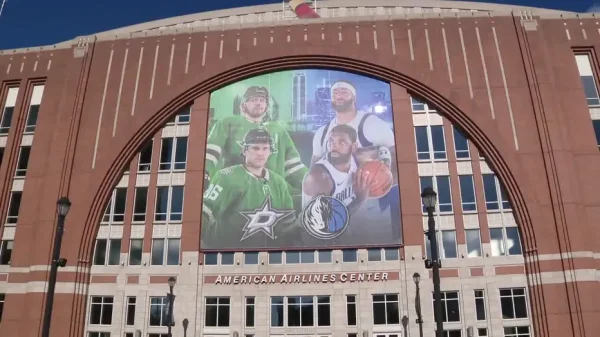
Just days after the meeting, Alberts called the deal off partially due to the fact that they were excluded from the official documentation. He said that the Stars would extend their lease agreement only if the Mavs did so too. The Mavs sent $100 and a letter to the Stars informing them that they have the right to purchase the Stars’ interest in Center Operating Company, their shared venture that operates AAC. In response, the Stars mailed back the $100 and a letter saying that the Mavs have no right to declare a breach in the franchise agreement since they were not one of the parties in it.
Nearly ten months later, on Sept 9, 2025, City Manager Kimberly Bizor Tolbert informed Stars owner Tom Gaglardi that, in a text, Alberts finally suggested foundations for renewed negotiations. This would include increasing the Stars’ improvement request from at least $400 million to $500 million.
However, a fallout quickly ensued. On Oct 3, 2025, a news reporter announced that the Stars eyed Plano, specifically Willow Bend Mall, as a new home for their arena and discussed it with the cities of Frisco, The Colony, Arlington and Fort Worth. City Manager Tolbert wrote in a recap that “this shall serve as our notice of the Stars’ default with regard to Section 2.1 of the Franchise Agreement.” This eventually led to the main lawsuit on Oct 28. The Stars, however, filed a counterclaim seeking to “restore normal operations at the [AAC] and prevent the [Mavs’] attempted hostile takeover.”
Then, on Nov 18, 2025, the Stars filed for an amendment to their counterclaim. They found new files and alleged that during the sale of the Mavs by Mark Cuban to the Adelson family in 2023, the Mavs changed their principal location to Las Vegas, where the family is based; they felt that moving to Frisco was not as bad as moving to a city outside the state.
In addition to the newly found information, the Stars urged the Texas business courts to reopen their bankruptcy case from 2011; during their bankruptcy, the Mavs had the option to object to the Stars’ location of headquarters, but because they didn’t, the Stars argued that they could not do so fourteen years later; this is an example of practicing the statute of limitations, which is when one cannot file a contractual lawsuit or charge after four to six years. The city of Dallas, only a witness to the legal battle, hopes to keep both in the AAC. However, the city cannot directly control either team’s actions or motivations, though a jury trial was scheduled to take place on Jan 26, 2026, to settle this dispute. It has since been postponed to March 6.
The Hearing
In attendance at the March 6 hearing were many SMU law students and faculty , a few reporters, the sports teams’ legal teams, including Mavericks general counsel and chief ethics officer Sekou Lewis, and Stars president and CEO Brad Alberts. This included both of the franchises’ prolific lawyers, with the Stars hiring North Texas native Joshua Sandler of Winstead PC and the Mavs hiring New Yorker Chip Babcock, notorious for serving Oprah Winfrey, Dr. Phil, Jerry Jones and Mark Cuban.
Babcock argued that “[AAC] is not being maintained. It’s not improving. It has problems that any building this age will start to encounter that are not being addressed. So somebody has got to be in charge, or in six years, we, the citizens of Dallas, are going to face this magnificent building the same problems we’re facing with city hall today, where a different group of people responsible for the building didn’t keep it up.”
Babcock’s claim clearly aligned with the Mavs’ perspective, setting the tone. Tensions quickly escalated, however, as Sandler’s co-counsel, Frank Carroll, and Babcock exchanged heated rhetoric.
“Your honor, Mr. Babcock said, ‘Someone has to be in charge,’” Carroll replied to Babcock’s argument. “Well, who they’re alleging should be in charge is DSG [Dallas Sports Group]. And so, who is DSG? Well, it’s a Vegas corporation that traded Luka [Doncic] for a bag of magic beans.”
“Injured bag of beans,” interjected Babcock.
“Well, yes,” Carroll said. “And of course Anthony Davis.”
This was in reference to the highly unpopular trading of face-of-the-franchise superstar Luka Doncic by the Mavs to the Los Angeles Lakers for [injury-prone] Anthony Davis, Max Christie, and a 2029 1st-round pick.
In a closing statement, Caroll said that “we [the Stars] ask that you [the judge] deny the Las Vegas Mavs’ — excuse me, Dallas Mavericks’ — motion for summary judgment and grant the Stars’ motion.”
The heated dynamic between the two legal teams reflected the underlying friction between the two franchises, making the battle one of not just property, but pride.
Judge Bill Whitehill didn’t rule on any of the seven motions for summary judgment. However, the case seems destined for an official jury trial on May 11.
The Fans
As for any sports team, the fans are the driving force behind their motivation, besides money. So let’s hear what they have to say.
“I wouldn’t mind if the Stars moved, especially if they were to relocate to Willow Bend, because it would be much easier for me to go to their games instead of going to downtown Dallas for that,” Plano Senior student and avid Stars fan Ashley Lenoir said.
Relocating to a suburb provides an opportunity for suburban fans to go to games more easily. Beyond accessibility, moving can also yield job opportunities, increased spending in surrounding areas to improve the suburb, and an increase in the tourism market. Since sports bring people from outside the area, more resources will go their way. This, in turn, generates more revenue for not just the team but also the suburb investing. Then, the suburb would use that money to improve other aspects of the town, creating a positive flywheel for the team and the suburb. However, this is only ideal if both the team and the suburb can compromise, and the team is not horrendously failing.
“It’s not really a good idea to move, to be honest. I feel like moving the Stars to say Frisco would be weird. Because almost every NBA and NHL team is, and should be, located in the heart of the city, not outside of it,” Plano Senior student and ardent Mavs fan Adrian Romero commented.
On the downside, a new venue for either or both teams will increase the cost of living in the city they move to. Those potential improvements to support the sports teams are not free, circling back to the previously mentioned economic impact. Cities like Plano or Frisco are already relatively expensive to live in, so residents would most likely not enjoy the move despite the decrease in commute time to see them. Furthermore, not everybody in the suburbs wants to see them or is a fan; some live in the suburbs for the sole purpose of dissociating with the city.
The fans play a crucial role in sports. They control the revenue, team culture, and management decisions. Of course, there are the motivational aspects to it, but their most impactful action is investing; not only are they spending money, but also time. Generally, teams operate based on how the fans act; according to a British study written by Bradley Busch, fan support can boost the physical strength of athletes by up to 8%. Without them, players will literally be less likely to continue to play.
The Takeaway
For every action, there will always be pros and cons; it all depends on the priorities of the teams and the cities. And ultimately, this lengthy and complicated legal battle between the Mavs and Stars is a struggle of property and pride, a tale as old as the beginnings of modern sports. The fans and residents of DFW? They’re in the middle of this titanic battle, having to pay the hefty price.